Keeping Family History Alive
By Meg Nance Coker, Special Collections Librarian
This month, as you gather with friends and family (genetic, adopted, and/or chosen), you may swap old stories, look at photos and remember some of your shared history. While you’re at it, why not take a moment to think about preserving some of that history?
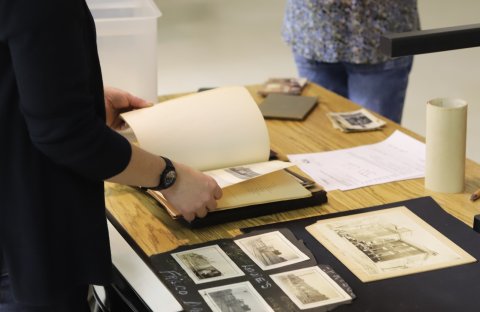
The first step in any project like this is to take stock of what you have like digital or film photographs, home movies, scrapbooks, recipe cards, old documents (letters, postcards and the like) and other mementos.
Next, consider what goals or results you’re after. Are you simply saving backups of what you already have, or do you want to create something more? What’s most important to you: keeping things secure or making them easy to share with other family members?
Your goals will help you decide what to do next.
Let’s start with the basics. Whatever you want to save should stay in a climate-controlled space. That means not in a shed, garage, attic, unfinished basement, or anywhere outdoors. Different types of materials have their own ideal temperatures, but they generally prefer a steady and comfortable climate.
Another good rule of thumb: whenever possible, don’t leave anything rolled up, folded, leaning or stored in any position other than laid out flat. And while we tend to think of ink as being more permanent, it’s also prone to running, so use a pencil whenever you’re adding notes and details. Always feel free to leave notes; not everyone will recognize the people in a photograph or know exactly when you took that one road trip. Memory is a slippery thing, so when it comes to notes, the more the merrier.
Keep in mind that any wear and tear from handling will add up over time. You’ll want to reduce how much you need to grab, grip, pull, or otherwise handle the items you’re trying to save. That’s part of why we “archive-y folks” like to place things in folders instead of envelopes.
There’s always the option to make something new. My favorite is a personal history interview. We’ve got resources and guides for every step of the process, but the core of it is recording an interview with someone who has an interesting story, so their experiences and their voice are preserved for others to hear. I even interviewed my grandparents, Mary Moore Nance and John Nance — that recording is available to listen to online.
We have plenty of free resources available if you want to learn more about preserving what you already have:
A DIY Archiving Resource Stash is available here.
The Oral History Resource Guide is available here.
More personal history interviews are available online here.